Nutrition is the central theme in modern wellness. It shapes diet trends, lifestyle habits, and personal routines of people. The growing prominence of nutrition has given rise to a wave of dietary supplements, restrictive regimens, and quick-fix plans, that promise everything from weight loss to mental clarity. Yet, most of these solutions work on a one-size-fits-all approach and overlook individual needs.
What is an Ayurvedic diet, and what are its core principles?
The Ayurvedic dietary system emphasises on holistic and personalised nutrition. A balanced Ayurvedic diet has eating routine and preparation methods that are aligned with one’s physical, mental, and dietery needs.
Ayurveda recognises Ahara (food) as one of the three pillars of health, along with Nidra (sleep) and Brahmacharya (balanced energy). Based on the understanding of individual Prakriti (constitution), Ayurvedic nutrition addresses the unique requirements of each person. When consumed according to the right principles, food becomes Mahabhaishajya (the most powerful medicine). The focus extends beyond what is consumed, to when, how, and in what state of mind it is taken.
In this blog, we dive deeper into Ayurvedic principles of nutrition and learn how they can help you build sustainable, healthy habits, and live a life full of holistic nourishment.
Ayurveda recognises Ahara (food) as one of the three pillars of health, along with Nidra (sleep) and Brahmacharya (balanced energy). Based on the understanding of individual Prakriti (constitution), Ayurvedic nutrition addresses the unique requirements of each person. When consumed according to the right principles, food becomes Mahabhaishajya (the most powerful medicine). The focus extends beyond what is consumed, to when, how, and in what state of mind it is taken.
In this blog, we dive deeper into Ayurvedic principles of nutrition and learn how they can help you build sustainable, healthy habits, and live a life full of holistic nourishment.
Dosha Balancing Ayurvedic Nutrition
The Tridoshas (Vata, Pitta, and Kapha) are the three fundamental energies in the body that govern key physiological and psychological functions. When out of balance, each Dosha tends to manifest as a distinct set of ailments. A balanced diet in Ayurveda should be tailored to one’s dominant Dosha.
- Vata is light, dry, and cold. To balance it, favour warm, moist, and nourishing foods like cooked grains, root vegetables, soups, dairy or nut milks, and healthy oils. Minimise raw, cold, or highly bitter foods.
- Pitta is hot and sharp. To pacify it, choose cooling and mildly astringent foods, like leafy greens, melons, dairy, coconut water, and avoid excess heat from spices, alcohol, and fried foods.
- Kapha is heavy, oily, and cold. Stimulate it with warm, dry, light foods such as lentils, bitter greens, and warming spices. Avoid sweet, oily, or cold items that increase sluggishness.
Principles of a Balanced Diet in Ayurveda
Modern nutrition defines a balanced diet through fixed metrics like calories, macros, or nutrient-dense combinations. Ayurvedic nutrition, however, moves beyond these measures; emphasising on holistic qualities like seasonal alignment, food compatibility, and mindful eating. Thus, the approach to nutrition becomes a dynamic, individualised practice.
- The Shad Rasas (six tastes) guide the meals: Each of the tastes- sweet, sour, salty, bitter, pungent, and astringent influence Doshas differently. A balanced plate should incorporate multiple tastes to maintain physiological harmony. For example, a stew containing sweet carrots, sour yogurt, pungent spices, and astringent legumes is a great example of Ayurvedic food for health. Overindulging in any one taste can disturb Doshas.
- Ritucharya aligns food with seasons: When we align our diet with seasonal cycles, it supports gut health by enhancing the microbiome and promoting efficient digestion. Ayurveda recommends cooling, hydrating foods in summer, and warming, grounding foods in winter; each in accordance with the body’s changing environmental demands.
- Caution against Viruddha Ahara (incompatible food combinations): Certain food combinations should be avoided like sour fruits with milk, or milk with honey, as they may produce toxins in the body and impair digestion.
- Mindful eating practice (Ahara Vidhi Vidhan): Ayurveda emphasises eating in a calm, undisturbed environment, mindful chewing and regular mealtimes. Reheated food should not be consumed, as it weakens Agni.
Practical Ayurvedic Nutrition Tips for Beginners
If you are new to Ayurveda, include these simple, harmless tips into your daily routine to improve nutrition:
- Morning’s first ritual: Start your day with a glass of warm water or herbal tea, as it activates Agni (digestive fire).
- Embrace Ayurvedic food for health like seasonal fruits: Enjoy the seasonal fruits easily available in your region. Fruits like ripe berries or pomegranate can be eaten with a sprinkle of coconut or walnuts for added nutrition.
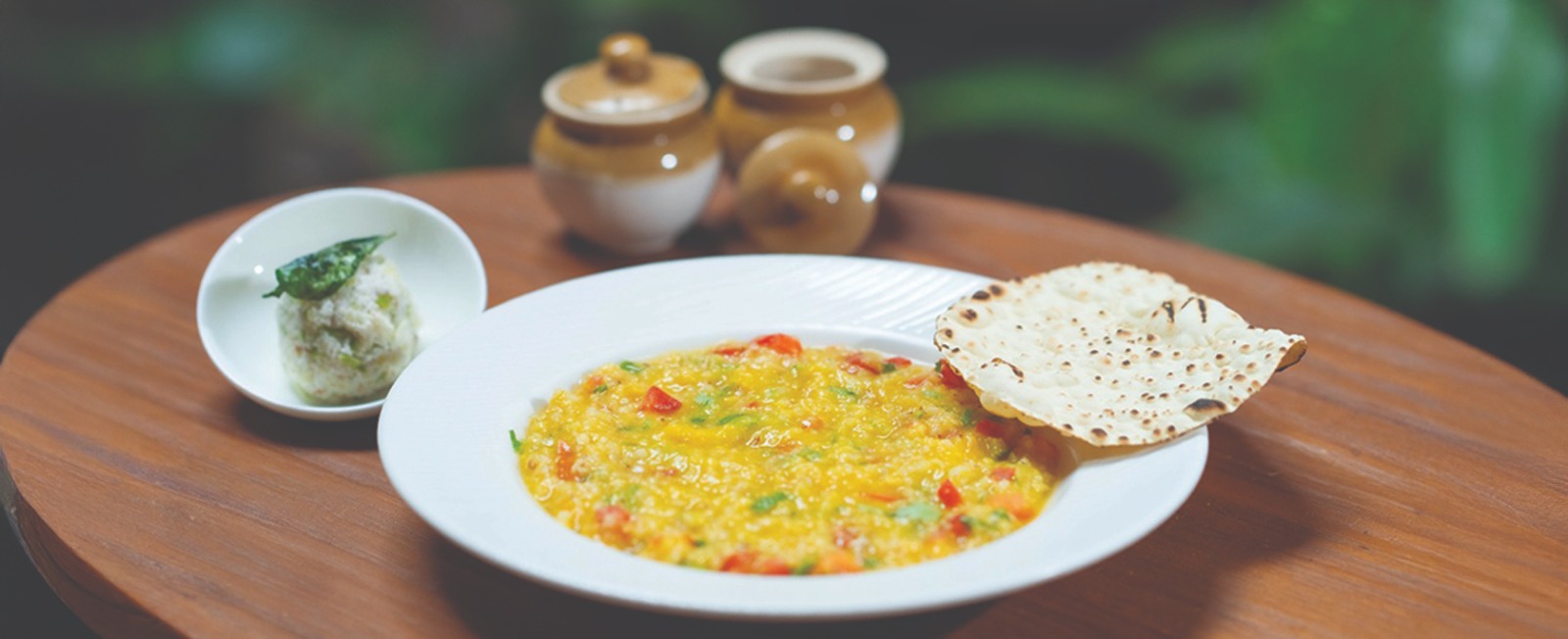
- Meals with all tastes: Ayurvedic nutrition talks about having meals with most of the six tastes. For example, Moong Dal Khichdi or Dal stew with multi-coloured vegetables, and fragrant spices.
- Honour mindfulness: Sit down to eat without screens, while chewing and savouring every bite slowly. Avoid rushing or overeating.
- Listen to your body: Pay attention to the food that makes you feel energised, versus the food that makes you feel heavy and bloated. Adjust the portion sizes and ingredients accordingly. If your digestion feels sluggish, chew on ginger or have a cup of fennel tea after meals.
Evidence-Based Benefits of Ayurvedic Nutrition Over Modern Nutrition
Modern nutrition follows a linear, reductionist framework, where the calories are counted, macros are measured, and nutrients (proteins, fats, vitamins) are isolated. This way, it applies general guidelines for populations. Ayurveda, in contrast, works on a holistic approach, considering multiple factors, and multiple outcomes. For instance, where conventional nutrition might attribute an ailment’s origin to one isolated factor like caloric imbalance or nutrient deficiency, Ayurvedic nutrition acknowledges multiple causes of the disease (diet, lifestyle, mental state, environment).
Despite their differing approaches, Ayurveda and modern nutrition share common ground: both uphold the value of including whole grains and vegetables, and the practice of moderation. Emerging research is beginning to bridge the two worlds. Studies now highlight that principles rooted in Ayurvedic nutrition, such as combining foods to balance the doshas, eating with the rhythms of the day, and aligning one’s diet with the seasons can have measurable health benefits.
A recent randomised controlled trial, published in PubMed, explored two approaches to managing IBS (Irritable Bowel Syndrome): Ayurvedic nutritional therapy and the conventional low-FODMAP diet. While both groups reported improvement, those following the Ayurvedic protocol experienced significantly greater symptom relief over a three-month period, as measured by the IBS-SSS score. The study concluded that patients with IBS seem to benefit significantly from Ayurvedic nutritional therapy. This reinforces the potential of Ayurvedic meal planning, rooted in individual constitution and mindful food combinations, as a powerful, personalised approach to supporting gut health.
Despite their differing approaches, Ayurveda and modern nutrition share common ground: both uphold the value of including whole grains and vegetables, and the practice of moderation. Emerging research is beginning to bridge the two worlds. Studies now highlight that principles rooted in Ayurvedic nutrition, such as combining foods to balance the doshas, eating with the rhythms of the day, and aligning one’s diet with the seasons can have measurable health benefits.
A recent randomised controlled trial, published in PubMed, explored two approaches to managing IBS (Irritable Bowel Syndrome): Ayurvedic nutritional therapy and the conventional low-FODMAP diet. While both groups reported improvement, those following the Ayurvedic protocol experienced significantly greater symptom relief over a three-month period, as measured by the IBS-SSS score. The study concluded that patients with IBS seem to benefit significantly from Ayurvedic nutritional therapy. This reinforces the potential of Ayurvedic meal planning, rooted in individual constitution and mindful food combinations, as a powerful, personalised approach to supporting gut health.
Why is Kerala Ideal for Embracing Ayurvedic Nutrition?
It is easy to get caught up in the noise of counting calories and switching diets in pursuit of visible improvements. But somewhere along the way, we lose sight of what true nutrition means; one that nourishes not just the body, but the mind and soul too.
Ayurveda reminds us that wellness doesn’t have to be an outcome of drastic shifts or fleeting trends. It can be cultivated gently, through small, conscious, everyday choices. Instead of chasing weight loss or gut resets through momentary diets, Ayurveda invites us to build a stronger foundation, where food becomes medicine, and nourishment flows in alignment with the seasons.
This philosophy of Ayurvedic nourishment finds its richest expression in Kerala, the birthplace of Ayurveda. The tropical climate, fertile land carrying medicinal herbs and plants, and deep Ayurvedic heritage make it the perfect setting for authentic Ayurvedic nutrition. Locally grown produce like coconut, ginger, curry leaves, and red rice are used to curate a diet routine that supports digestion and heals holistically.
If you are seeking Ayurvedic nutrition, look no further than Amal Tamara, a NABH accredited Ayurvedic centre in Kerala, India. Nestled amidst serene backwaters, here Sattvic meals are crafted for you using seasonal produce and medicinal spices. Each dish is tailored to your Prakriti, offering a therapeutic culinary experience grounded in Kerala’s rich wellness heritage. Begin your wellness journey today.
Ayurveda reminds us that wellness doesn’t have to be an outcome of drastic shifts or fleeting trends. It can be cultivated gently, through small, conscious, everyday choices. Instead of chasing weight loss or gut resets through momentary diets, Ayurveda invites us to build a stronger foundation, where food becomes medicine, and nourishment flows in alignment with the seasons.
This philosophy of Ayurvedic nourishment finds its richest expression in Kerala, the birthplace of Ayurveda. The tropical climate, fertile land carrying medicinal herbs and plants, and deep Ayurvedic heritage make it the perfect setting for authentic Ayurvedic nutrition. Locally grown produce like coconut, ginger, curry leaves, and red rice are used to curate a diet routine that supports digestion and heals holistically.
If you are seeking Ayurvedic nutrition, look no further than Amal Tamara, a NABH accredited Ayurvedic centre in Kerala, India. Nestled amidst serene backwaters, here Sattvic meals are crafted for you using seasonal produce and medicinal spices. Each dish is tailored to your Prakriti, offering a therapeutic culinary experience grounded in Kerala’s rich wellness heritage. Begin your wellness journey today.
FAQs
Yes, absolutely. Ayurvedic nutrition is not rigid. It is adaptive by design. The core principle lies in understanding your individual constitution and digestive capacity. Even if you are vegan or lactose/gluten intolerant, Ayurveda offers a rich spectrum of alternatives like nut milks, rice, lentils, fresh fruits, and spices. These can be thoughtfully combined to create a balanced diet in Ayurveda that suits your lifestyle and dietary choices without compromising on nourishment.
This is a common myth. While Ayurvedic nutrition generally favours warm, cooked meals for easier digestion, it does not completely exclude raw foods. The inclusion of raw versus cooked foods depends on your Dosha, digestive strength (Agni), and the season. For example, light salads may suit Pitta types in summer but could aggravate Vata in winter. It’s all about context and balance, not a blanket rule.
Unlike modern diets that often promise rapid transformation, Ayurvedic food for health works gently and gradually. The aim is sustainable balance, not quick fixes. Some people notice improved digestion and energy within days, while deeper shifts like better sleep, hormonal balance, or mental clarity, may take weeks or months. Ayurveda nurtures long-term wellness by addressing the root cause, not just the symptoms.
Not at all. One of the most empowering aspects of Ayurvedic nutrition is its accessibility. While certain herbs like ashwagandha or triphala can enhance well-being, a truly balanced Ayurvedic diet can be built with everyday staples: grains, pulses, seasonal vegetables, ghee, and common kitchen spices like turmeric, cumin, and fennel. The real magic lies in how you combine and prepare them, not in sourcing rare ingredients.
Yes, you can. Ayurveda is not about rigid rules. It is about mindful choices. Even while travelling or dining out, you can follow Ayurvedic food for health principles by choosing freshly cooked meals, avoiding cold or processed foods, and opting for grounding or light options depending on your Dosha and the season. Carrying herbal teas or digestive spices like fennel or cumin can also help maintain balance on the go.