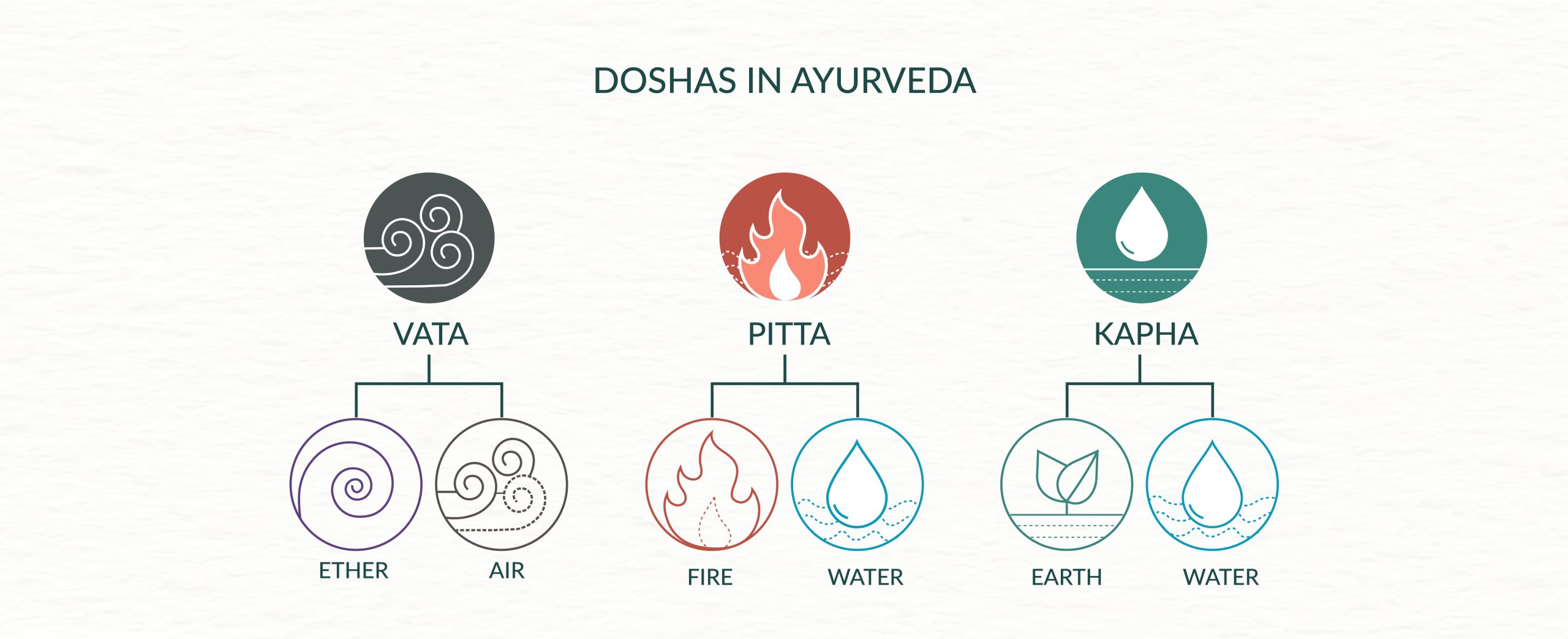
At the core of Ayurvedic philosophy are three interconnected concepts – The Panchamahabhutas (five great elements), the Ayurvedic Doshas (vital governing energies in the body), and the Prakriti (an individual’s unique energetic blueprint).
The five elements – earth (structure), air (movement), water (cohesion), fire (heat), and ether (space) are the building blocks of universe. Everything in nature, from monumental structures to a blade of grass, is composed of these elements. The human body too, is governed by their dynamic interplay. Combinations of these elements give rise to functional energies in the body, called the Ayurvedic Doshas. These biological energies regulate all physiological and psychological processes within the body. While all three Doshas exist in every individual, their proportions vary, giving rise to a unique constitution, or Prakriti, as distinct as a fingerprint.
There are three Ayurvedic Doshas (Tridoshas):
In the following sections, we journey deeper into each Ayurvedic Dosha, and how these fundamental energies shape our bodily functions. We will understand the common characteristics to identify them, as well as the ailments that manifest when they are out of balance. We will also explore the best Ayurvedic insights to treat these imbalances, diving into the concepts of Vata Dosha treatment, Pitta Dosha treatment and Kapha Dosha treatment.
The five elements – earth (structure), air (movement), water (cohesion), fire (heat), and ether (space) are the building blocks of universe. Everything in nature, from monumental structures to a blade of grass, is composed of these elements. The human body too, is governed by their dynamic interplay. Combinations of these elements give rise to functional energies in the body, called the Ayurvedic Doshas. These biological energies regulate all physiological and psychological processes within the body. While all three Doshas exist in every individual, their proportions vary, giving rise to a unique constitution, or Prakriti, as distinct as a fingerprint.
There are three Ayurvedic Doshas (Tridoshas):
- Vāta Dosha (Air + Ether): Linked to movement and communication. It governs neural activity, respiration, circulation, and excretion. The qualities associated are dryness, lightness, cold, mobility, subtlety, and roughness.
- Pitta Dosha (Fire + Water): Linked to transformation and metabolism. It regulates digestion, thermoregulation, hormonal secretions, and vision. The qualities associated are oily, sharp, hot, light, liquid, and spreading.
- Kapha Dosha (Earth + Water): Linked to cohesion and stability. It provides structure, lubrication, and immunity. The qualities associated are heavy, slow, cold, oily, dense, and static.
In the following sections, we journey deeper into each Ayurvedic Dosha, and how these fundamental energies shape our bodily functions. We will understand the common characteristics to identify them, as well as the ailments that manifest when they are out of balance. We will also explore the best Ayurvedic insights to treat these imbalances, diving into the concepts of Vata Dosha treatment, Pitta Dosha treatment and Kapha Dosha treatment.
Why the need to understand Ayurvedic Doshas?
“Ayurveda does not ask what illness you have. It asks who you are.”At times, we face health challenges that feel prolonged and unrelenting, with no clear end in sight. Our response is to turn towards potions, painkillers or modern wellness methods, that numb down the discomfort or provide a sense of normalcy for a short while. But often, the distress creeps back with even greater intensity.
This could be the body signalling a deeper imbalance that requires more than cookie-cutter wellness routines, or over-the-counter pharmaceuticals. Here, Ayurveda steps in. By deeply analysing and understanding which Ayurvedic Dosha is dominant and definitive in your body, it is possible to customise therapies and treatments that work in favour of balancing it. The benefits of Ayurvedic therapies and lifestyle goes beyond supressing relief; they provide you with a long-term path to caring for your health, holistically.
Here are some ways in which understanding your Doshas is immensely useful in Ayurveda:
- Helps to build an ideal wellness regimen: We all wish to elevate our lifestyles through healthier habits, mindful eating, and exercise.But wellness is not one-size-fits-all, what works for one may not suit another. Creating a routine aligned with your Prakriti helps you stay balanced, more efficiently.
- Complete personalised healing: Any therapy, herb, or treatment, when tailored to your Ayurvedic Dosha, acts more precisely and effectively.
- Detection of early imbalances: Recognising early signs of imbalance in the Doshas aids in addressing the issues, before they evolve into chronic illnesses.
- Explains Emotional and Mental Patterns: Ayurvedic Doshas also govern the mental and emotional characteristics of a person. For example, excess Pitta leads to irritability, while excess Vata causes anxiety. Understanding these concepts can help regulate mental and emotional aspects of being.
Vata Dosha

The Vata Dosha is composed of air and ether. It governs all motion in the body and mind like breathing, circulation, neural communication, thinking, and elimination. Vata individuals may have racing thoughts and imaginative thinking. They have a knack for multitasking. When imbalanced, they can display forgetfulness and anxiety. Vata Dosha treatments are tailored in response to the symptoms exhibited at the time.
Below given are a few characteristics present in Vata-dominant individuals:
Below given are a few characteristics present in Vata-dominant individuals:
- Lean body, Dry skin
- Irregular appetite and digestion
- Highly creative and mentally agile
- Enthusiastic but tires easily
- Sensitive to cold, wind, and sensory overload
- Constipation, bloating, joint pain
- Insomnia, anxiety, restlessness
- Dry skin, tremors, irregular menstruation
- Emotional instability, forgetfulness
- Diet: Eat warm, moist, and oily food that tastes sweet, sour, or salty; avoid eating raw, cold, or dry food.
- Routine: Set and follow regular mealtimes. Stay hydrated, ensure adequate sleep, and reduce screen time.
- Lifestyle: Avoid overstimulation, excess travel; embrace grounding rituals
- Treatments:
- Abhyanga (warm oil massage)
- Shirodhara (warm oil on the forehead)
- Svedana (herbal steam therapy)
Pitta Dosha

Pitta Dosha is composed of fire and water. It governs digestion, metabolism, body temperature, and cognitive functions like decision-making and perception. Pitta-dominant individuals tend to be sharp-minded and driven by ambition. They often have strong digestion and exhibit a natural leadership quality. When imbalanced, they may experience anger, skin issues, and excessive heat in the body. Pitta Dosha treatments are designed to restore coolness, calm, and promote emotional stability.
Given below are few key characteristics of Pitta-Dominant individuals:
Given below are few key characteristics of Pitta-Dominant individuals:
- Medium, muscular build
- Oily skin, prone to acne
- Strong appetite and metabolism
- Intelligent, assertive, goal-driven
- Aversion to heat; tendency to sweat excessively
- Skin issues: acne, rashes, inflammation
- Digestive problems: acid reflux, heartburn
- Emotional symptoms: anger, jealousy, impatience
- Sour taste in mouth, excessive sweating, overheating
- Diet: Consume cooling, sweet, bitter, and astringent food like cucumbers, coconut water, and leafy greens. Avoid spicy, oily, sour, or fermented food.
- Lifestyle:
- Engage in calming exercises like swimming, yoga, or nature walks
- Prioritise self-care and work-life balance
- Avoid direct sun and high-heat environments
- Ayurvedic Practices:
- Sitali Pranayama (cooling breathwork)
- Use of herbs like mint, fennel, and coriander
- Regular rest and emotional detox through journaling or mindful practices
Kapha Dosha

Kapha Dosha is composed of earth and water. It governs structure, cohesion, and lubrication, in the body and mind. Kapha individuals are typically calm, nurturing, and physically strong. They may enjoy routine and move at a steady pace. When imbalanced, they may experience sluggishness, weight gain, congestion, or emotional attachment. Kapha Dosha treatments are tailored to tackle the imbalances exhibited at the time.
Here are the key characteristics exhibited by Kapha-Dominant individuals:
Here are the key characteristics exhibited by Kapha-Dominant individuals:
- Sturdy, well-developed physique
- Smooth, oily skin
- Slow digestion and metabolism
- Calm, compassionate, and loyal nature
- Tendency towards routine and resistance to change
- Weight gain and water retention
- Excess mucus and congestion
- Sluggish digestion and elimination
- Depression, attachment, and lack of motivation
- Oversleeping and daytime drowsiness
- Diet: Favour light, warm, and dry food that taste bitter, pungent, or astringent. Limit the intake of dairy, sweets, and oily food.
- Lifestyle:
- Engage in regular, vigorous exercise
- Avoid daytime naps
- Embrace variety and new experiences
- Ayurvedic Practices:
- Dry brushing and stimulating massages
- Herbs like ginger, turmeric, and black pepper
- Breathing exercises to invigorate the mind and body
Do you know your combination of Ayurvedic Doshas?
Each Ayurvedic Dosha carries unique strengths. It shapes how we think, feel, and function. But when imbalanced, it can quietly disrupt health. Left unchecked for a long time, these imbalances may lead to chronic health issues. Aggravated Vata may lead to anxiety or joint pain, Pitta to inflammation or ulcers, and Kapha to weight gain or congestion. But with the help of time-honoured Ayurvedic wisdom, we can detect the early signs of disarray, and tailor the right wellness routines for our Prakriti.
At Amal Tamara, restoring Doshic balance is central to your healing journey. Our physicians conduct detailed pre- and post-arrival consultations to assess your unique constitution. Every therapy, meal, and practice is then meticulously customised to support your individual needs and nurture your Ayurvedic Doshas.
While basic awareness of Ayurvedic concepts help, deeper healing requires expert guidance. Amal Tamara’s integrated approach to wellness blends ancient insight with clinical precision, treating the root cause, not just the symptoms. Connect with us to understand your true energetic self beyond cells and structures and bring your Doshas into balance.
At Amal Tamara, restoring Doshic balance is central to your healing journey. Our physicians conduct detailed pre- and post-arrival consultations to assess your unique constitution. Every therapy, meal, and practice is then meticulously customised to support your individual needs and nurture your Ayurvedic Doshas.
While basic awareness of Ayurvedic concepts help, deeper healing requires expert guidance. Amal Tamara’s integrated approach to wellness blends ancient insight with clinical precision, treating the root cause, not just the symptoms. Connect with us to understand your true energetic self beyond cells and structures and bring your Doshas into balance.
FAQs
Your Prakriti (innate Dosha constitution) remains constant from birth. It’s much like your Ayurvedic blueprint. However, your Vikriti (current state of imbalance) can fluctuate due to lifestyle choices, seasonal changes, ageing, diet, stress, and other external influences. What may seem like a change in Dosha is usually a temporary imbalance. Ayurvedic treatments aim to restore balance by aligning your Vikriti with your original Prakriti.
Yes, though it is quite rare, some individuals are Tridoshic, meaning they possess all three Doshas in near-equal proportion. Such individuals tend to exhibit more overall balance in physical and mental attributes. However, they must remain particularly attentive, as disturbances in any of the three can still lead to imbalance.
Doshas govern both the physical body and the mind. For example, Vata types are typically imaginative and spontaneous but may lean towards anxiety; Pitta types are focused and driven yet may become impatient or irritable; Kapha types are compassionate and steady but can experience lethargy or emotional heaviness. Understanding your Dosha can be key to emotional and psychological self-awareness.
Online Dosha quizzes may offer a basic introduction to your likely constitution, but they are not a substitute for a professional consultation. Only an experienced Ayurvedic practitioner can conduct a thorough Dosha assessment through detailed questions, physical observation, and diagnostic tools such as Nadi Pariksha (pulse diagnosis).
Not at all. Ayurveda emphasises a continual, mindful approach to health. Since Dosha balance is affected by seasonal shifts, diet, lifestyle, emotions, and age, it requires regular observation and adjustment. Maintaining Doshic balance is a dynamic process: more a daily practice than a one-off solution.