Amidst the constant demands of daily life, it’s easy to overlook the toll such a lifestyle takes on our mental well-being. Many wear the mask of being “fine,” while silently struggling with inner battles. Mental health remains one of the most misunderstood aspects of our lives, often hidden behind the wall of appearances.
For centuries, Ayurveda has recognised the deep connection between mind and body. Ayurvedic therapies for mental health focus on restoring balance through a personalised combination of diet, movement, breathwork, and natural alignment. Such a tailored approach nurtures both the mind and body, guiding individuals back to a place of clarity and peace.
For centuries, Ayurveda has recognised the deep connection between mind and body. Ayurvedic therapies for mental health focus on restoring balance through a personalised combination of diet, movement, breathwork, and natural alignment. Such a tailored approach nurtures both the mind and body, guiding individuals back to a place of clarity and peace.
The Ayurvedic Mindscape: A Journey Through the Inner Cosmos

Ayurveda views the mind as a vital axis around which our entire being revolves. Known as Manas, it is seen as the delicate bridge between the world we see and the world within us. When the mind wavers, the entire system echoes its unrest.
We understand these mental rhythms through three subtle energies: Sattva (clarity), Rajas (activity), and Tamas (inertia). These Gunas are ever-moving forces that colour our thoughts and emotions. When Sattva prevails, the mind is calm, joyful, and clear. But an excess of Rajas may lead to agitation or burnout, while Tamas brings fogginess, disinterest, or despair. Mental distress emerges when the light of Sattva dims under the weight of the other two.
The picture deepens when these Gunas entwine with the Doshas (Vata, Pitta, and Kapha), the foundational energies that govern the body. When they fall out of balance, their ripple is felt in the mind too:
We understand these mental rhythms through three subtle energies: Sattva (clarity), Rajas (activity), and Tamas (inertia). These Gunas are ever-moving forces that colour our thoughts and emotions. When Sattva prevails, the mind is calm, joyful, and clear. But an excess of Rajas may lead to agitation or burnout, while Tamas brings fogginess, disinterest, or despair. Mental distress emerges when the light of Sattva dims under the weight of the other two.
The picture deepens when these Gunas entwine with the Doshas (Vata, Pitta, and Kapha), the foundational energies that govern the body. When they fall out of balance, their ripple is felt in the mind too:
- Aggravated Vata triggers racing thoughts, anxiety, and insomnia.
- Disturbed Pitta often shows up as perfectionism, irritability, or frustration.
- An imbalanced Kapha might manifest as lethargy, sadness, or withdrawal.
Mental Health Disorders in Ayurveda
Classical Ayurveda recognises a wide spectrum of mental disorders: Vishada (dejection), Unmada (psychosis), Avasada (dullness), each understood through Doshic imbalances and Guna distortions. Two people may share a symptom, yet require entirely different care. Ayurveda looks deeper at misalignments in our spirit (Atma), mind (Manas), and senses (Indriya). When these pillars fall out of harmony, we lose our inner steadiness and disconnect with ourselves.
In this view, healing becomes a recalibration of the inner landscape, one that contains everything from our thought patterns and emotional currents to physiological rhythms. Ayurvedic therapies for mental health offer a suite of deeply attuned, time-tested interventions to support this delicate rebalancing.
In this view, healing becomes a recalibration of the inner landscape, one that contains everything from our thought patterns and emotional currents to physiological rhythms. Ayurvedic therapies for mental health offer a suite of deeply attuned, time-tested interventions to support this delicate rebalancing.
Ayurvedic Practices for Better Mental Health
- Dinacharya (daily routines): A time-bound daily routine that aligns your biological clock with nature; bringing stability to energy, mood, and overall wellbeing.
- Sattvavajaya (mental discipline): Literally translating to ‘mastery of the mind’, this ancient method enhances Sattva by calming mental turbulence and fostering clarity and resilience.
- Āchāra Rasāyana (ethical living): A behavioural therapy rooted in values like truthfulness and compassion, nurturing mental clarity through disciplined, ethical living.
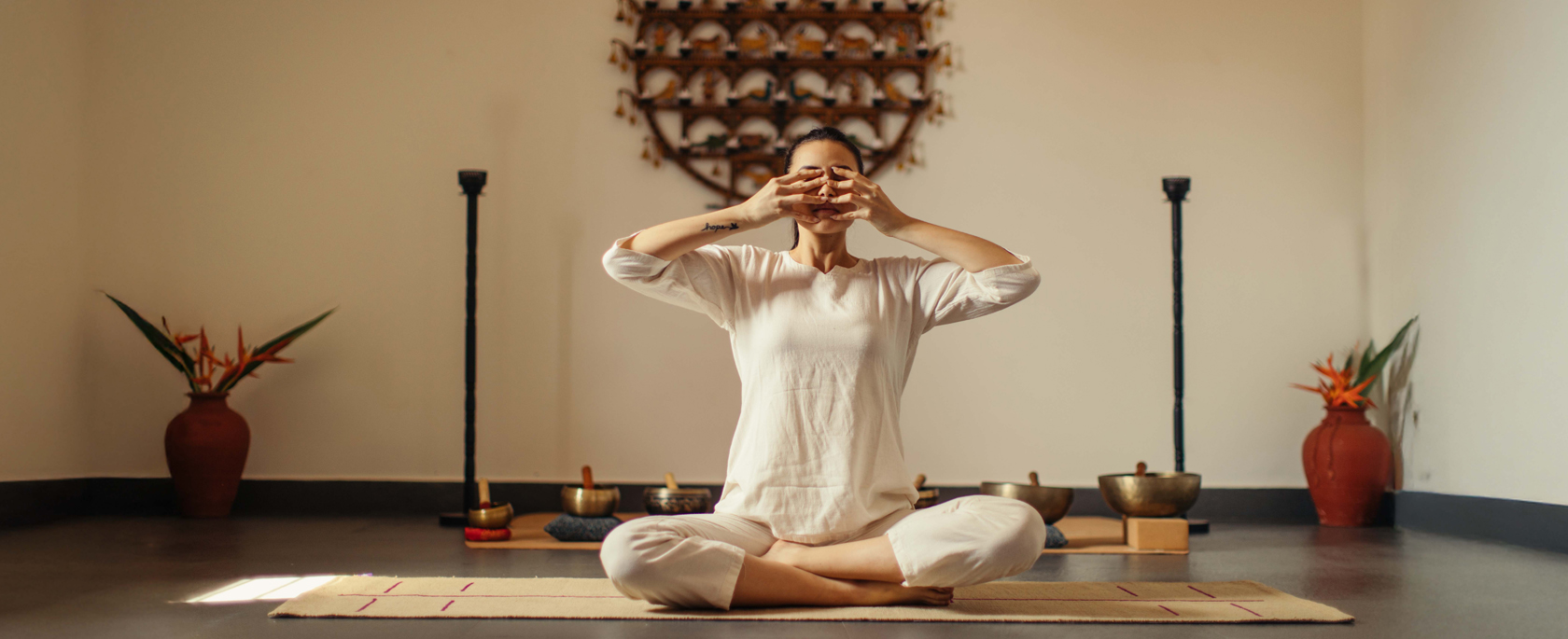
- Yoga and Pranayama: Mind-body practices combining posture and breath control to reduce stress, boost vitality, and elevate mental clarity by increasing Sattva.
- Medhya Rasāyanas (Herbs): Adaptogenic herbs like Ashwagandha, Brahmi, and Jatamamsi supplement your brain with essential nutrients and help improve the power of remembrance, retention, and acquisition.
- Shirodhara (oil therapy): A soothing stream of medicated oil poured over the forehead—traditionally used to quiet the mind, ease nervous exhaustion, and release deep emotional tension.
The confluence of the ancient and the modern
Modern research continues to affirm what Ayurveda has long understood, that healing should start from within, and the approach should be holistic. Herbs like Ashwagandha and Brahmi, revered as medhya rasāyanas, are now clinically shown to provide stress relief and enhance cognitive function. Lifestyle disciplines rooted in Ayurvedic mental health concepts, from Yoga to Pranayama, mirror the very practices now championed by contemporary wellness science for emotional resilience and mental clarity. In fact, when time-tested Ayurvedic principles are thoughtfully integrated with modern diagnostic tools, the outcomes can be truly transformative.
This thoughtful meeting of ancient wisdom and modern understanding gives way to a more holistic path to healing—one that views the mind not as a fault to correct, but as a vital part of our being, worthy of care, balance, and deep attention. At Amal Tamara, we walk this path with you. We assess your unique constitution and curate Ayurvedic therapies for mental health, meals, and rituals that align with your specific needs. Your retreat here will be a personalised journey, supported by certified Ayurvedic practitioners and a compassionate team of caregivers. You are welcomed not just with treatment, but with care that nourishes every layer of your being.
Here, healing isn’t an escape. It’s a return to balance, to clarity, and to the self. Take the first step towards mental wellness. Connect with us and start your journey today!
This thoughtful meeting of ancient wisdom and modern understanding gives way to a more holistic path to healing—one that views the mind not as a fault to correct, but as a vital part of our being, worthy of care, balance, and deep attention. At Amal Tamara, we walk this path with you. We assess your unique constitution and curate Ayurvedic therapies for mental health, meals, and rituals that align with your specific needs. Your retreat here will be a personalised journey, supported by certified Ayurvedic practitioners and a compassionate team of caregivers. You are welcomed not just with treatment, but with care that nourishes every layer of your being.
Here, healing isn’t an escape. It’s a return to balance, to clarity, and to the self. Take the first step towards mental wellness. Connect with us and start your journey today!
FAQs
No, mental health in Ayurveda is a multidimensional discipline. While herbs and meditation are important, Ayurveda also prescribes daily routines (Dinacharya), ethical conduct (Āchāra Rasāyana), personalised diets, and therapies like Shirodhara to restore mental equilibrium. It’s a comprehensive system that views mental well-being as a balance between the body, mind, senses, and soul.
Ayurveda does not position itself in opposition to modern medicine but complements it. For acute mental health conditions, integrative care involving both Ayurvedic and allopathic approaches can offer better outcomes. Ayurveda excels in preventive care, stress relief solutions, and long-term mental balance through lifestyle alignment.
Stress relief in Ayurveda is rooted in understanding individual constitution (Prakriti) and tailoring solutions accordingly. Instead of generalised advice, Ayurveda offers care through targeted herbs, daily rituals, detox therapies, and breathing practices that address the root causes of stress.
Not at all. A core principle of Ayurvedic therapies for mental health is customisation. Two people with similar symptoms, like anxiety or fatigue, may receive entirely different treatments based on their Dosha constitution, Guna imbalances, and lifestyle factors.
Subtle changes like irregular sleep, emotional reactivity, digestive issues, withdrawal from social interaction, or lack of enthusiasm can all indicate early mental imbalance. Ayurveda encourages addressing these signs proactively before they evolve into deeper disorders.